Comparing hrt vs trt often creates confusion because Testosterone Replacement Therapy (TRT) is technically a specialized medical subset of broader Hormone Replacement Therapy (HRT). HRT encompasses all therapeutic protocols designed to replace declining endogenous endocrine hormones, including estrogen, progesterone, thyroid, and testosterone. In contrast, TRT specifically addresses clinical hypogonadism by replacing deficient androgenic hormone levels in men.
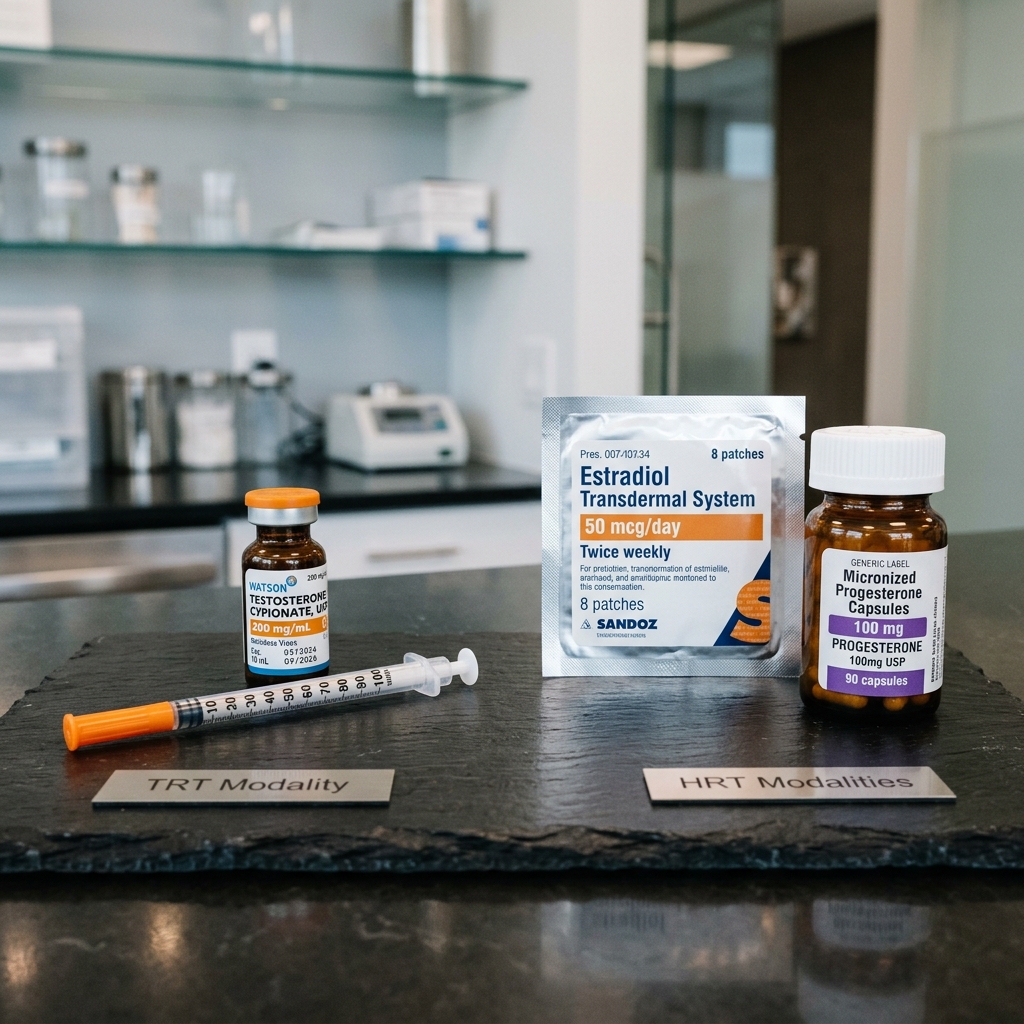
Understanding the distinction helps individuals evaluate diagnosis requirements, lab bloodwork parameters, administration routes, and overall treatment goals across mens hrt and female hormone optimization.
Core definitions and target populations
While both treatment categories restore physiological balance, their primary clinical applications differ across demographics, biological mechanisms, and targeted hormones.
Hormone Replacement Therapy (HRT)
HRT most commonly refers to menopause treatment in women, replacing depleted estradiol and progesterone to relieve vasomotor symptoms, protect bone density, and prevent urogenital atrophy. However, HRT also covers thyroid replacement (levothyroxine), growth hormone therapy, and gender-affirming hormone protocols. Detailed guidance is available in our overview on how and when to start hrt.
Testosterone Replacement Therapy (TRT)
TRT focuses specifically on male androgen deficiency (low testosterone or hypogonadism). When adult male total testosterone drops below 300 ng/dL alongside symptoms like fatigue, erectile dysfunction, loss of muscle mass, and low libido, prescribers administer exogenous testosterone to restore normal physiological ranges (typically 500 to 800 ng/dL).
Endocrine mechanics: Androgens vs Estrogens
The physiological mechanisms driving HRT and TRT involve distinct feedback loops within the endocrine system:
- Hypothalamic-Pituitary-Gonadal (HPG) Axis in Men: Exogenous testosterone administration suppresses gonadotropin-releasing hormone (GnRH), luteinizing hormone (LH), and follicle-stimulating hormone (FSH). This negative feedback loop reduces endogenous intratesticular testosterone production and sperm synthesis.
- HPG Axis in Women: During perimenopause and menopause, ovarian follicle depletion causes endogenous estrogen to drop permanently. Administering low-dose systemic estrogen supplements falling circulating levels without requiring suppression of functional testicular or ovarian tissue.
Comprehensive comparison: HRT vs TRT
| Parameter | Broad HRT (Female / Menopause Focus) | TRT (Male Hypogonadism Focus) |
|---|---|---|
| Primary Hormones | Estradiol, Micronized Progesterone, Estriol | Testosterone Cypionate, Enanthate, Gel |
| Primary Target Symptoms | Hot flashes, night sweats, bone loss, GSM | Low libido, erectile loss, fatigue, muscle loss |
| Diagnostic Threshold | Clinical symptom presentation & age | Morning Total & Free Testosterone < 300 ng/dL |
| Administration Forms | Patches, gels, oral capsules, pellets | Intramuscular injections, subQ, gels, cream |
| Cardiovascular Impact | Cardio-protective inside 10-year window | Neutral when managed within normal ranges |
| Fertility Impact | Not contraceptive (requires separate birth control) | Suppresses spermatogenesis via LH/FSH feedback |
For men evaluating clinic options, comparing best online trt clinics provides insight into pricing, physician oversight, and telehealth access.
Key diagnostic requirements and monitoring
Lab testing for HRT
For perimenopausal women over 45 with classic symptoms, blood testing is often unnecessary because hormone swings vary daily. For women under 40 or those presenting complex symptoms, prescribers order serum estradiol, FSH, LH, and thyroid panels.
Lab testing for TRT
Prescribers require mandatory blood testing before initiating TRT. Guidelines require two separate fasting morning blood draws (between 7:00 AM and 10:00 AM) showing total testosterone below reference ranges. Additional monitoring includes:
- Total & Free Testosterone: Baseline and ongoing serum levels.
- Hematocrit & Hemoglobin: TRT stimulates erythropoiesis; hematocrit exceeding 54% requires clinical dosage adjustment or phlebotomy.
- Prostate-Specific Antigen (PSA): Monitoring prostate health prior to and during active therapy.
- Estradiol (E2): Excess testosterone converts to estrogen via the aromatase enzyme, requiring regular monitoring.
Managing potential complications is detailed in our dedicated analysis of trt side effects.
Is TRT considered HRT?
Yes. From a strict medical classification standpoint, TRT is a specialized form of HRT. Just as insulin therapy replaces pancreatic endocrine secretion in Type 1 diabetes, TRT replaces testicular androgen output. However, in popular health media, medical practices frequently use "HRT" to describe female hormone regimens and "TRT" for male testosterone management.
Frequently Asked Questions
Can women take TRT?
Yes. Women naturally produce low levels of testosterone in the ovaries and adrenal glands. Micro-dosed testosterone therapy (often 1/10th of male doses) is prescribed to postmenopausal women experiencing persistent low libido or muscle loss that does not respond to estrogen alone.
Does TRT stop natural testosterone production?
Yes. Exogenous testosterone signals the hypothalamus and pituitary gland to suspend LH and FSH secretion, causing temporary suppression of natural testicular production and reduced sperm counts. Clinicians may add HCG (Human Chorionic Gonadotropin) to preserve fertility.
Is TRT lifelong once started?
Generally yes. Because exogenous administration suppresses the HPTA axis, stopping TRT causes serum testosterone to drop back to baseline hypogonadal levels unless a post-therapy recovery protocol is prescribed under medical supervision.
Sources
- Bhasin, S., et al. (2018). Testosterone Therapy in Men With Hypogonadism: An Endocrine Society Clinical Practice Guideline. The Journal of Clinical Endocrinology & Metabolism, 103(5), 1715-1744.
- Stuenkel, C. A., et al. (2015). Treatment of Symptoms of the Menopause: An Endocrine Society Clinical Practice Guideline. The Journal of Clinical Endocrinology & Metabolism, 100(11), 3975-4011.